Friday, August 25, 2006

All because of my missing hamster


Was given two hamsters recently. Within a week of their arrival, one of the hamsters went missing!! It was such an unexpected event that the whole family was all excited and worried. Worried that the little hammy will die of hunger, thirst or accidents. Accidents such as eaten by neighbours' dogs, stray cats or stepped on by any of us at night. Don't laugh, was told that someone actually killed her pet hamster accidentally because she slept on it!! Of course her pet was a free roaming, house-trained hamster.

Well, why am I telling you all these? Yes, I was thinking of writing this whole incident from the perspective of my hamster (by the way, his name is Snuggle) when I realised it is pretty difficult to know how a hamster feels. I've not observed him long enough - is he happy to have escaped? Was he afraid when he was out in the open? Was he trying to find his way back to his cage when he was tired and hungry? I really do not know.

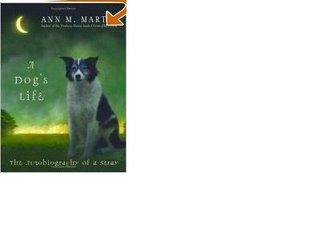
Thus I went to the library and found this book - A Dog's Life: The Autobiography of a Stray by Ann M Martin. This book is not just for animal lovers. This is a well-written story through the eyes of a dog. Squirrel, the dog went through many trials and hardships as she wandered from place to place, slowly growing from a pup into an old dog. Throughout her adventures she met a variety of humans - some caring while others irresponsible. This is a remarkable novel that will touch the hearts of all. In the end, it brings about hope that maybe, someday, all animals will live in peace, and none will be left "unwanted."

This book is available in NLB (J MAR).

Wednesday, August 23, 2006

Picture Books to look out for

Noah's Mittens
by Lise Lunge-Larsen
This is a playful pourquoi tale. How the leopard got its spots. Why do chameleons change colour. These are examples of such tales. Pourquoi [por-kwa] means "why" in French. Pourquoi tales are old legends told to explain why certain events happened. These tales often start in the past and end when the explanation is complete.

A Very Full Morning
by Eva Montanari
A not so typical story about first day of school. First day is a frightening day for many. However, the kids will be reassured and sigh with relief when the story comes to an end.

Probuditi!
by Chris Van Allsburg
If you are a fan of Chris Van Allsburg, you will not want to miss this. Once again, he had managed to marry his characteristic twist in the story and stunning illustration in this spell-binding tale.

These are Houghton Mifflin Fall 2006 publications (to be published in US around Sep/Oct).

Thursday, June 01, 2006

Chicken chickens

I would like to recommend you the JP book "Big Chickens" by Leslie Helakoski, illustrated by Henry Cole.
Cole's bright and colourful chickens on the cover is simply charming. The chickens' facial expression is realistic yet hilariously funny. The artwork runs in tandem with the plot and captures the silliness of the characters.
As I turned the pages, you was intrigued by the power of fear. Yet with all the hilarious happenings, I soon realised that we can find courage from humour and humour can be more powerful than fear.
Helakoski used repetitions, questions and rhyming action words to tell of all the sly, silly humour. He had put them together so cleverly and fluently that I just wanted to read on after the first two pages.
It is definitely a good book for story time.

Wednesday, May 31, 2006

Surreal

Reading Sonya Hartnett's Surrender was a real eye-opening experience. This book may not appeal to everyone coz it isn't an easy read, but at the heart of the story is an intriguing protagonist whose state of mind is under constant attack and the reader is never certain whether to believe him. I certainly had a hard time reading this novel but I'm glad I did coz it gave me the opportunity to see things in a different perspective, a complex and complicated state of mind, not entirely sound, but not unsound too. Hope you know what I mean. At every stage of the story you are never certain of the reality that is happening. Surrender by the way is the name of the dog of the protagonist, Gabriel. If you are looking for a challenging read, this is one title you should have a go at.

Something Different

I read this book called Zoo, by Graham Marks who happens to be married to another author called Nadia Marks, who by the way, as i meander along, wrote a chick-lit title Bitter Sweet. The interesting things about Zoo is that the author took the trouble to go to US to do his research even though he is British. Probably not a new concept but when i read the novel it didn't come as coming from a British author as there was a great deal of American in it.
The story starts with a kidnapping of a boy called Cam but as he soon discovers, the kidnapping was the real beginning of his life for he discovers horrific details of how he came about, about his life which has been a lie. Almost akin to Maximum Ride by James Patterson but different in many ways. I don't like giving the story away but it was gripping and it makes you think that about the saying that things are not what they seem. Many things are a facade and the true picture manifests when the person or thing or situation is under stress.

Monday, April 03, 2006

Time well spent

One title that I am constantly raving about is Wolf Brother and the subsequent Spirit Walker by Michelle Paver. Set 6000 years ago, it has an immediate primitive feel about it and draws the reader in quickly. Torak, the chief protagonist of the stories, which by the way is in six parts, with only the first 2 books published so far, is both an admirable character and yet one that endears himself to us. I won't give a synopsis of the story so as to entice people to read it. But what I can say is that Paver has done a great deal of research to maintain the authenticity of the time frame, because that gives the story it's raw edge and a strong feel of how the ancients used to live. There is also an inextricable link between the spirit world and the real world so much so that that the two are sometimes inseparable. The various characters in the story are well-drawn out and by the second book, Spirit Walker, the characters grow through the challenges they face but at the same time more questions are posed which I believe the subsequent books will reveal.
Definitely a book worth your time.

Thursday, March 30, 2006

What Makes A Book A Children's Book?

  • A central character (protaganist) who is the age of the intended audience.
  • Central issues of the story concern children in some ways.
  • A straight forward story line.
  • A linear and limited time sequence in a confined setting.
  • Language is concrete and vivid and not overly complex.

Not too sure if the last 3 points really apply anymore. Children's book is getting more and more sophisticated. Even the age of the protagonist may not be a good gauge now.

However, the 5 points above do serve as a guide. : )

Wednesday, March 22, 2006

A Timeless Tale

"Why should I care what happens to an arrogant,
over-dressed china rabbit?
But I did care, desperately,
and I think I can safely predict you will, too."
----- Katherine Paterson


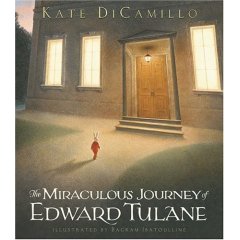
"The Miraculous Journey of Edward Tulane" is a book about Edward, a very well dressed china rabbit, with a complete wardrobe of handmade silk suits, pajamas, and clothes for every occasion.

Edward belongs to a little girl who adores him completely. Unfortunately, he feels no emotions towards anyone. Then, in an unexpected event, Edward becomes lost and is found by a series of changing owners. With each new owner, his heart grows in love.

In the end, the question is not can Edward love, but can he love again after the depth of his heartbreak as he loses each owner.

A timeless tale , complete with stunning full-color plates by Bagram Ibatoulline, honors the enduring power of love. Don't pass this book by because it sits in the children's section...this book is for everyone.

Tuesday, March 07, 2006

Outstanding Illustrators for Children Books

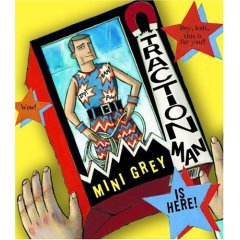
The 2005 Boston Globe-Horn Book Award winner is Traction Man Is Here by Mini Grey, published by Alfred A. Knopf.

"In picture books, words and pictures are a fantastic double act, each doing a different job, maybe even telling a different story — but you need both of them to have the whole story. And even the youngest people are expert readers of pictures. So in pictures you can say very complex things, things that it would take an enormous number of words to explain." ----- Mini Grey (award acceptance speech)


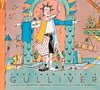
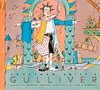
The 2004 (awarded in 2005) Kate Greenway Medal winner is Jonathan Swift's “Gulliver” by Chris Riddell (Text by Martin Jenkins) published by Walker.


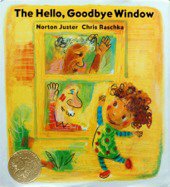
The 2006 Caldecott Medal winner is The Hello, Goodbye Window illustrated by Chris Raschka and written by Norton Juster (Michael di Capua Books, an imprint of Hyperion Books for Children)

Wednesday, December 21, 2005

Controversial views on a picture book

Have recently discovered that views can really be diverse.

You may have come across books written by Babette Cole. Cole's characteristic wacky humor is very prominent in both text and art. One of her trademark characterstic is poking fun on real life subjects; often a bit rude and off the wall.

For "Mummy Never Told Me", publishers had reviewed it as humorous and deals with realistic issues --- which is not unexpected. However, if you have a chance to browse the book, you will either be 'mad' with the inaccurate review or 'rave' about this fantastic book.

There are questions like 'Why do old men have hair on their ears but not their heads!' - humourous question for kids to think about ....... 'Why must I go to school when mummy was expelled from hers?' - appropriate question for adults to ponder ........'Why women prefer to fall in love with other women...and some men with other men?' taboo question that went too far?

Everyone is entitled to his/her own opinions. This short description cannot do justice to the book. This is a picture book! Go to the library shelves and check it out for yourself. Just make sure you do not buy this book as a gift for just anyone! Review it before deciding if you'd read it to your kids over a bedtime drink and a biscuit.

You are most welcome to post your comments here too!!

Tuesday, November 08, 2005

A YP Book

Read the book "The Devil's Footsteps" by E.E. Richardson recently. The plot is simple but the conventional use of a sinister, oft-repeated rhyme and haunted house did bring shivers down the spine. Personally, I think the theme is very suitable for young adults (and adults), especially reluctant reader who likes scary movie.

Even though I am not much into supernatural and horror stories, I was captivated after the first few pages. I actually want to continue reading - to discover all the dark, mysterious places and mythical history of the town described.

As the story unfolds, the question of fear, evil and death was articulated by the 15 years old protagonist, Bryan. Together with two other boys, they risk their lives to find and destroy the mysterious power that haunt their community.

This is a good read for someone who is too busy for thick novels. This book is less than 200 pages, well laid out and definitely a page turner.

Wednesday, October 26, 2005

Author or editor

Have you ever been surprised by something that is totally different from what you believe it to be? I've always thought that the author of a book has the ultimate say over the text, images and layout. Little did I know that the real decision maker is the editor!

An idea for a book not necessarily come from authors' book proposal. Very often, editors and sales reprentatives are the ones who brought the ideas to the table. Once the editorial board agrees on a book proposal, editor in charge will decide on the most suitable author to assign to.

Besides making suggestions for revisions on the manuscript, it is the editor's choice of images to accompany the text; author has nothing to do with the selection (unless she raises strong objection to any of the images selected). However, the author is the one to put a caption for each of the image selected : ).

Another interesting thing about the editorial process is the number of people involved. Besides the author and editor, there are the 'expert' (to verify the accuracy of the concept presented), the photo researcher, the copyeditor (to check basic grammer, punctuation, consistency, logic, sense and typesetting features), the keyboarder, the designer, proofreader, indexer and last but not least the production manager.

Have I told you that each of the role above does overlap? Besides the proofreader, the copyeditor, keyboarder, and editor proofread whenever the manuscript lands on their hands. People involved in and enjoyed the editorial process are normally 'perfectionists' - meticulous and detailed. Changes can still take place even when the manuscript is on the way to the printing press (as long as not printed) !!

Thursday, September 29, 2005

Freedom to read ?

Have you heard about 'Banned Books Week'? Well, the name may be misleading...... the intention is to raise awareness that Americans should not take for granted the freedom to read.

Historically, many attempt of challenges have been made by people on books and on authors. Things that conflict with or disagree with anyone's belief. The attempt to remove or restrict access to 'objectionable' children/teen materials are often very prominent. Somehow, individuals and groups seems to be setting a much higher standard for children/teen materials.

In the American libraries, librarians are to challenge censorship. Librarians are guardians to the freedom to read. Library Bill of Rights empowered the librarians to be responsible. What is the delicate balance between freedom to read and ensuring our children/teen are not reading 'bad' materials?

Personally, I'd experienced the frustration of censorship which is the result of an individual or a group's point of view - such as pornographic versus artistic; blasphemy versus perception....thus, freedom to read is not a bad thing. On the other hand, from the perspective of a parent or teacher, we know the influence reading materials can have upon the young minds. How then can we practise the freedom to read?

One thing I discovered is the assumption on library materials. Many assume that all materials from the library should be 'safe' for children/teen. We can only start embracing freedom to read when parents or teachers are aware that libraries' responsibility is not to protect readers from 'bad' materials. Their main and professional responsibility is to provide information and enlightenment ; that includes challenging censorship.

It is the responsibility of individual to decide what they want or do not want to read! For children/teen who are not ready to make such decisions, parents can decide on their behalf. However, when a parent disapproves of any book, he/she should only attempt to stop his/her child from reading it; not attempt to restrict or even remove access.

Just like a book can have very different effects on individuals; the take on freedom to read can also spark many different responses. Are you so comfortable without the freedom to read that you wanted censorship? Or are you a frustrated librarian that wonders why you must remove or restrict access to yet another book?

Wednesday, September 07, 2005

Reading And Play

Attended the Astrid Lindgren celebration at WRL yesterday and was reminded of the relationship between 'reading and play'. Astrid Lindgren, an advocate for a child's right to play. Astrid's believe has been very distinctively portrayed in the character of Pippi Longstocking.

The first speaker Ms Åsa Tolgraven has shown us the unique curriculum of the Swedish pre-schools where the right to play, adventure and fantasy are the key words. The second speaker Ms Lwin Moe Moe has emphasized that reading should be fun. Strategies to support early literacy are through activities and drama, allowing children to experience, explore and play.

I remembered learning from 'sound' books when I was a young mother. I was fortunate enough to be able to find as well as to pay for these invaluable resources - press the button and we can sing along and enjoy the words and illustrations at the same time. We also tried singing the rhyme without the help of the recorded tune! taking turns to sing the lines or alternate singing the songs. Both my child and myself had really good time : )

I did some simple fingerplays with my child when she was a baby. When she got older, I decided to expand my 'repertoire'. I bought a 'tape and book' set and started my learning journey. Instead of enjoying the fingerplay with my child, I spent most of my time learning and practising! Learning from tape and books was really frustrating for me : (
After much agony, decided to stick to my existing repertoire and enjoy my child instead : )

Wondering if the library collection should include the 'sound' books for young working mothers. How are the new generation of young mothers coping? Are they spending enough time to read and play with their kids? Do the new generation mothers know anything about fingerplays?

Monday, September 05, 2005

Teen Titles

Should teen titles be classified as a children's books rather than adult books? This has always been an issue for discussion. Does a teenager consider himself an adult? There's no definite answer but booksellers have found that teen readers who are 13 to 14 years of age are quite happy to browse through the teen shelves in the Children Section. Teenagers who are 15 or older will be most embarrassed to be 'caught' in the Children Section!

What is considered a good read for teenagers? It is often difficult to "pigeonhole" what makes a good read cos' teenagers have very broad tastes. From the 'little survey' I did with my nephews and nieces and my friends' nephews and nieces who are teenagers, their interest ranges from Dan Brown to Gossip Girls, fantasy to realistic fiction, fiction to non-fiction and horrifying discoveries that some typical Singapore teenagers read only 'exam worthy' books !!

Teen titles are often classified based on the age of the protagonist and the subject matter. Very often, the protaganist must be one that a teen can relate to i.e. a teenager. The subject matter must be seen as relevant to a teenager. Issues and angst common to teens. Fantasy fictions that cater to their imaginative minds. Teens are maturing so fast nowadays that the simple assumption described above are often irrelevant. Thus, many writers of teen books are putting in contents that crossover to the adult world.

Recently, some teen books are beginning to appeal to adult readers. These "crossover" books are currently rare and few in the market. Some crossover titles are Meg Rosoff's How I Live Now (Puffin), Jennifer Donnelly's A Gathering Light (Bloomsbury) and Mark Haddon's The Curious Incident Of The Dog In The Night (Doubleday).

According to Becky Stradwick, children buyer for Borders UK, on possible crossover titles that are on the way, "Books such as Elsewhere, Tamar and The Boy in the Striped Pyjamas all deal with complex adult themes and deserves to reach a wider audience." (Stradwick, Becky. "Action for the autumn." The Bookseller August 2005: 28.)

Elsewhere (Hardcover)by Gabrielle Zevin
Publisher: Farrar, Straus and Giroux (BYR) (September, 2005)
ISBN: 0374320918

Tamar by Mal Peet
Publisher: Walker Books, Limited (October 2005)
ISBN: 0-7445-6570-7

Boy in the Stripped Pyjamas by John Boyne
Publisher: Random House Children's Books (February 2006)
ISBN: 0-385-60940-X

Tuesday, August 16, 2005

Books under the same series!


The Magic School Bus series books often upset my mind whenever I wanted to borrow them from the library. Let me explain.....

These are wonderful non-fiction books that explore various subjects in the form of a story i.e. fiction. When I discovered these books in the bookshop, I was so excited --- I wanted my girls to read them! I know the chances of them reading these 'stories' to pick up facts will be much higher for them to read our brand new but dust-covered World Book Encyclopedia at home.

Just as Junie B Jones, Narnia and Roald Dahl are shelved as a series in our home, I expect the Magic School Bus to be shelved together in the library as well. To my dismay, being non-fiction, they are shelved by DDC. In addition to DDC, there are also shelved according to author within the particular classification!

Another set of books that I find wonderful is the magic tree house series. The format and language used are suitable for readers to build confidence in reading yet the content is varied and informative. I think they are more wonderful than most basic readers used in schools.

The shelving of the magic tree house is however under both fiction and non-fiction. The magic tree house series is under fiction - shelved by author. The magic tree house research guide is under non-fiction, shelved by DDC.

I just could not explain why the very logical way of library shelving seems to upsets my logical mind! I simply expects to find all books under the umbrella of "The Magic School Bus" to be together; the magic tree house books, whether reseach guides or not to be together!
Unlike the good old days, series books are often by one author and one particular genre. Now, series titles comes in variations e.g. Animal Ark Classics, Animal Ark Babies, Animal Ark Holidays...within the same series title, every book could be written by different authors!
Guess nothing can be as simple as it used to be. The world is now changing, dynamic and global. We need to find our own 'logic' in this chaotic world to satisfy our own mind.